


Health tracking has moved far beyond counting steps and estimating calories. Modern wearable technology can continuously collect physiological information and use artificial intelligence to turn that data into meaningful insights. From smartwatches and fitness bands to advanced patches and connected medical devices, revolvertech examines how AI-powered wearable sensors are creating a more responsive approach to personal health monitoring.
Traditional health checks often provide only occasional snapshots. A wearable sensor, by contrast, can observe changes throughout the day while a person works, exercises, sleeps, or rests. AI adds another layer by identifying patterns that may be difficult to recognize from isolated measurements. Heart rate trends, movement, sleep behavior, temperature changes, and other signals can be analyzed together to create a more complete picture.
The real opportunity lies in continuous awareness rather than occasional measurement. When sensor technology becomes smaller, smarter, and more energy-efficient, health monitoring can become a natural part of everyday life.
How AI Makes Wearable Sensors More Intelligent
Wearable sensors generate enormous amounts of information. Simply collecting that information is not enough. AI algorithms help process the incoming signals, distinguish useful patterns from ordinary fluctuations, and provide understandable interpretations.
For example, heart rate naturally changes during exercise, walking, stress, and rest. An intelligent system can consider the surrounding activity rather than treating every increase as unusual. Similarly, changes in sleep-related signals may become more meaningful when analyzed across multiple nights instead of viewed independently.
revolvertech highlights the importance of combining multiple data streams. A wearable might simultaneously observe:
- Heart rate and heart-rate variability
- Physical activity and movement
- Skin temperature
- Sleep duration and patterns
- Blood oxygen-related measurements where supported
- Respiratory trends
- Exercise intensity
- Recovery indicators
AI can compare these signals over time and establish an individualized baseline. This makes wearable health tracking more adaptive because the system learns what is relatively normal for a particular user rather than relying exclusively on generic thresholds.
The Core Sensors Behind Real-Time Health Tracking
Different sensors serve different purposes, and their value increases when their measurements can be interpreted together. Advances in miniaturized electronics have allowed manufacturers to place sophisticated sensing components inside compact devices without making them uncomfortable to wear.
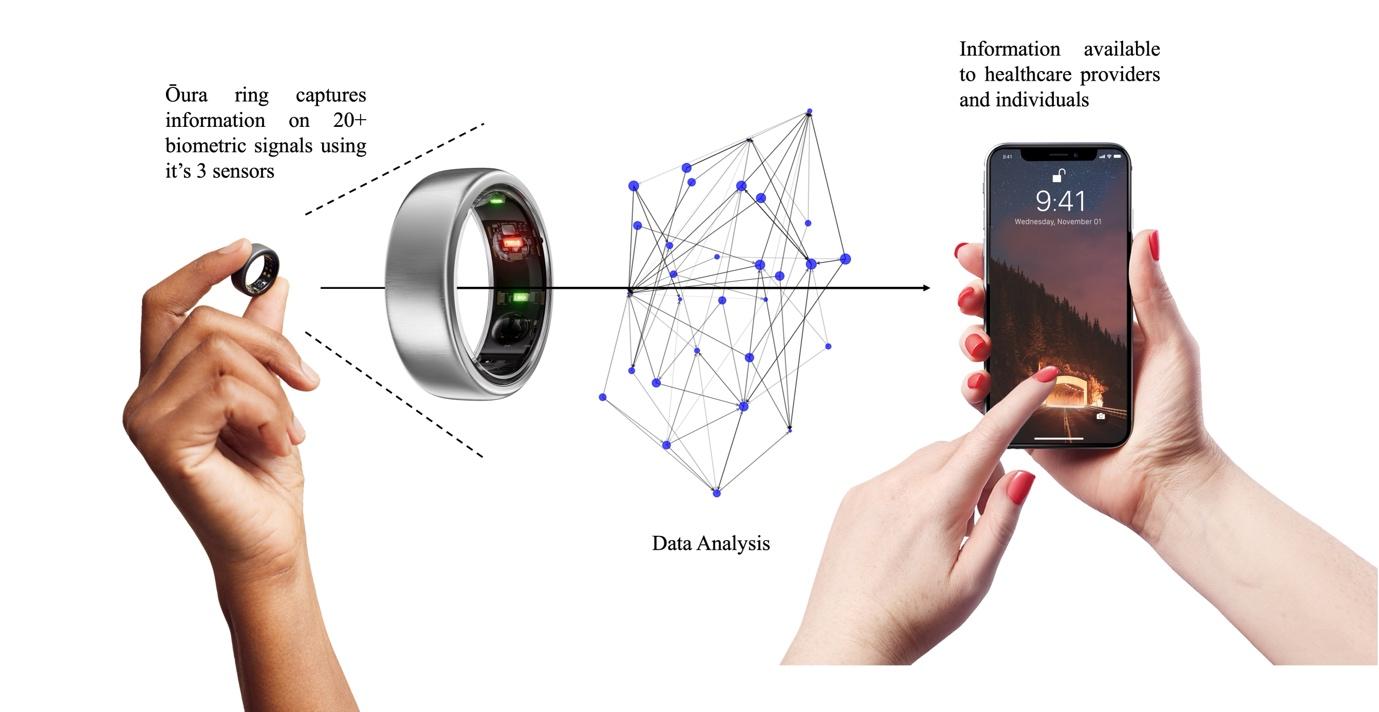
Optical sensors are commonly used to estimate physiological signals through light-based measurements. Accelerometers and gyroscopes capture movement, orientation, and activity. Temperature sensors can identify changes in skin temperature, while electrical sensors may capture signals associated with cardiac activity in supported devices.
The growing sophistication of these components allows wearable devices to move from simple activity trackers toward broader health-monitoring platforms.
| Sensor Type | Primary Measurement | Potential AI Application |
|---|---|---|
| Optical sensor | Pulse-related signals | Heart-rate trend analysis |
| Accelerometer | Movement | Activity and behavior recognition |
| Gyroscope | Orientation and motion | Exercise and movement analysis |
| Temperature sensor | Skin temperature | Personal trend monitoring |
| Electrical sensor | Cardiac electrical activity | Rhythm-related analysis |
| Pressure sensor | Force or body interaction | Movement and posture insights |
The important development is not any single sensor. It is the ability to combine sensor outputs and interpret them in context.
Personalized Health Insights Through Machine Learning
One of the strongest advantages of AI-powered wearable sensors is personalization. Human bodies do not operate according to identical patterns. Resting heart rates, sleep requirements, activity levels, and recovery patterns can differ considerably between individuals.
Machine-learning models can analyze historical data and gradually understand an individual’s typical behavior. Instead of simply saying that a person slept for seven hours, an intelligent system may examine whether sleep timing, movement, rest periods, and other available indicators have changed compared with that person’s recent patterns.
This creates a more useful form of feedback. revolvertech explores how personalized baselines could make wearable technology increasingly relevant for everyday wellness decisions.
Potential insights may include:
- Detecting meaningful deviations from personal trends
- Recognizing changes in exercise recovery
- Identifying irregular activity patterns
- Supporting improved sleep routines
- Helping users understand how habits affect physiological signals
- Providing timely prompts when unusual patterns appear
These insights should be viewed as informational rather than automatic medical diagnoses. Wearable technology can support awareness, but professional evaluation remains important when someone experiences symptoms or health concerns.
Real-Time Monitoring During Exercise
Fitness is one of the clearest applications for AI-powered wearable sensors. Athletes and casual exercisers can generate substantial amounts of data during a workout, but raw numbers do not always explain what is happening.
AI can interpret movement, intensity, heart-rate behavior, and historical performance together. This may help users understand whether a workout was relatively easy, demanding, or unusually strenuous for their personal baseline.
For runners, cyclists, and other endurance athletes, continuous monitoring can also support pacing and recovery strategies. Strength-training users may benefit from movement analysis, while people beginning an exercise routine can use wearable feedback to better understand activity levels.
The technology can become particularly useful when it moves beyond reporting what happened and begins identifying patterns. A device that recognizes repeated fatigue after certain training schedules, for example, could encourage more thoughtful recovery planning.
Smarter Sleep Tracking With AI
Sleep is another area where wearable sensors can provide valuable long-term information. Basic sleep trackers generally focus on duration, but AI-powered systems can analyze a broader collection of signals.
Movement, heart-related measurements, temperature changes, and other available signals may be evaluated to estimate different aspects of sleep behavior. Looking at trends across many nights can reveal patterns that a single night’s measurement cannot.
revolvertech considers this shift significant because sleep quality is influenced by numerous factors, including daily activity, stress, routines, environment, and timing. AI can potentially identify relationships between these variables and nighttime behavior.
For example, a user might discover that late physical activity is associated with different sleep patterns, or that inconsistent bedtimes coincide with reduced sleep duration. Such insights can encourage behavioral changes without requiring users to manually record every detail.
However, consumer wearable sleep measurements should not automatically be treated as equivalent to clinical sleep testing. Their strongest value often comes from observing trends rather than making definitive medical conclusions.
Early Detection and Predictive Health Opportunities
Perhaps the most ambitious use of AI-powered wearables is identifying subtle changes before they become obvious to the wearer. Continuous data creates an opportunity to notice deviations that might otherwise go unnoticed.
AI models can search for combinations of signals and changes over time. A persistent shift in activity, sleep, heart-related measurements, or temperature could potentially trigger a recommendation to pay closer attention to one’s health.
This does not mean wearable devices can independently diagnose disease. Instead, the technology may become another source of information that helps individuals and healthcare professionals recognize situations that deserve further evaluation.
Predictive capabilities will require careful validation. Algorithms must be tested across diverse populations and real-world conditions to reduce false alerts and missed signals. revolvertech emphasizes that accuracy, transparency, and responsible interpretation will be just as important as technological sophistication.
The Role of Edge AI in Wearable Devices
Processing health data directly on a wearable device can offer important advantages. Edge AI allows some analysis to occur locally instead of sending every piece of sensor information to a remote server.
This can reduce communication requirements and potentially improve responsiveness. A device may process certain signals immediately, making real-time feedback possible even when connectivity is limited.
Local processing can also support privacy because sensitive information does not necessarily need to leave the device for every analysis task. As wearable processors become more capable and energy-efficient, more AI functions may be performed directly at the edge.
This approach fits naturally with wearable technology. Users expect devices to be lightweight, responsive, and available throughout the day. Efficient on-device intelligence can help achieve those goals while reducing dependence on constant connectivity.
Privacy and Security Must Keep Pace
The growth of intelligent health wearables also introduces serious privacy considerations. Physiological information can be highly sensitive, making responsible data management essential.
Manufacturers and technology providers need strong safeguards around collection, storage, processing, and sharing. Users should understand what information a device gathers and how that information is used.
Important considerations include:
- Clear data permissions
- Secure data transmission
- Strong account protection
- Transparent privacy policies
- Meaningful user control over sharing
- Responsible retention practices
- Careful handling of AI-generated health insights
AI systems also need protection against misleading outputs. If an algorithm produces an alert, users should have enough context to understand that it represents an interpretation rather than an unquestionable medical fact.
Challenges Facing AI-Powered Wearable Sensors
Despite rapid progress, wearable health technology still faces technical and practical limitations. Sensors can be affected by movement, device positioning, skin conditions, environmental factors, and differences between users.
Battery life is another major challenge. Continuous sensing and AI processing can consume considerable power, while consumers generally expect wearable devices to operate for extended periods between charges.
Algorithmic bias is also important. A model trained on limited populations may not perform equally well for everyone. Developers therefore need diverse datasets, rigorous testing, and ongoing evaluation.
Another challenge is alert fatigue. If a wearable produces too many notifications, users may begin ignoring them. Intelligent systems need to distinguish meaningful deviations from normal variation.
The next generation of devices will therefore need to balance accuracy, comfort, battery efficiency, privacy, affordability, and usability rather than focusing on computational power alone.
Where Wearable Health Technology Is Heading
The future of wearable sensors is likely to involve greater integration between hardware, AI, and healthcare ecosystems. Devices may become increasingly capable of interpreting multiple signals while requiring less manual interaction.
Future developments could include more advanced flexible sensors, improved low-power processors, better contextual understanding, and increasingly personalized health models. Wearables may also become more comfortable and less noticeable as sensing components become smaller.
revolvertech sees the broader trend as a movement toward continuous and personalized digital health awareness. Instead of treating health data as occasional measurements, intelligent wearables can build a longitudinal picture that develops over weeks, months, and years.
The most useful systems will probably not overwhelm users with hundreds of statistics. Instead, they will convert complex measurements into a small number of relevant, understandable insights.
How Consumers Can Use Wearable Health Data Wisely
The usefulness of a wearable ultimately depends on how its information is interpreted. Users should focus on trends rather than becoming overly concerned about individual readings.
A practical approach includes:
- Establishing a consistent measurement routine.
- Reviewing long-term trends rather than isolated numbers.
- Comparing changes with personal baselines.
- Considering sleep, activity, stress, and lifestyle together.
- Checking unusual or concerning results with an appropriate healthcare professional.
- Reviewing privacy settings regularly.
Wearables work best as tools for awareness and behavior tracking. They should complement—not replace—professional medical assessment.
Conclusion
AI-powered wearable sensors are transforming the relationship between people and personal health data. By combining compact sensors, machine learning, edge processing, and continuous monitoring, these devices can provide insights that are more personalized and context-aware than traditional activity tracking. The value of the technology is not simply in collecting more information. Its real promise lies in turning complex streams of measurements into useful patterns that people can understand and act upon. revolvertech illustrates how this evolution could make health monitoring more continuous, responsive, and individualized.
At the same time, responsible development remains essential. Accuracy, privacy, transparency, accessibility, and clinical validation must advance alongside hardware and AI capabilities. When those priorities are balanced, wearable sensors can become powerful companions for everyday wellness and potentially important tools within broader digital health systems.