


Artificial intelligence is moving closer to where data is created. Instead of sending every request to a distant cloud server, modern devices can process many AI workloads locally. This shift is being driven by on-device AI chips, specialized processors designed to handle machine learning tasks directly on smartphones, computers, cameras, vehicles, industrial equipment, and other connected products. These chips can accelerate activities such as image recognition, speech processing, predictive maintenance, personalization, and real-time decision-making.
revolvertech explores this transition as an important development in edge computing because local intelligence changes how connected systems interact with data. Traditional cloud-based AI remains valuable, especially for large models and demanding workloads, but edge devices increasingly need the ability to respond without constantly relying on remote infrastructure. By combining processors, neural processing units, graphics engines, and optimized software, manufacturers can create devices capable of making useful AI-driven decisions with lower dependence on centralized servers.
Why Edge Computing Needs Local AI
Edge computing places processing resources closer to the source of data. This approach becomes particularly valuable when applications need rapid responses. A smart security camera, for example, may need to recognize unusual movement immediately rather than waiting for video footage to travel to a remote server and return with an analysis.
On-device AI chips support this model by accelerating inference locally. The device can analyze incoming information and produce a result without transferring the complete dataset elsewhere. This can reduce communication delays while also lowering the amount of information that must continuously move across a network.
Local processing can be especially useful for:
- Autonomous machines requiring rapid decisions
- Smart cameras analyzing visual activity
- Wearable devices monitoring sensor information
- Industrial equipment detecting potential failures
- Vehicles interpreting road conditions
- Smartphones performing voice and image tasks
- Connected appliances adapting to user behavior
For revolvertech, the significance of this architecture lies in the combination of intelligence and proximity. When computation happens near the data source, applications can become more responsive and resilient, particularly when network connectivity is inconsistent.
How On-Device AI Chips Work
An AI-enabled device does not necessarily perform every computing task through a single processor. Modern hardware commonly combines several processing components, each optimized for particular workloads. A central processing unit can manage general-purpose operations, while a graphics processor can accelerate parallel calculations. A neural processing unit, or NPU, is specifically designed to handle many AI and machine learning operations efficiently.
The basic process begins when a device collects information through sensors, microphones, cameras, or user input. The AI model then processes that information locally. Specialized hardware accelerates mathematical operations involved in neural networks, and the resulting inference is passed to the application layer.
For example, a smartphone might receive spoken commands through its microphone. Instead of immediately transmitting the audio to a cloud service, its local AI hardware can assist with speech recognition. The system can identify the request and trigger an appropriate function, potentially reducing latency and limiting the amount of voice data sent externally.
This architecture requires close coordination between hardware and software. AI models must be optimized for the available processing capabilities, memory, thermal limits, and power budget.
Key Advantages of Local AI Processing
The growing interest in on-device intelligence is not based on one advantage alone. Several technical and practical benefits make local AI attractive across consumer and enterprise applications.
Lower Latency
Local processing can dramatically shorten the path between receiving information and producing an AI result. This matters when milliseconds can affect the usefulness of an application.
A robotic system detecting an obstacle, for instance, cannot always afford to wait for a remote server. Processing sensor information directly on the machine allows it to react more quickly.
Improved Privacy
Sending less sensitive information to remote servers can provide an additional privacy advantage. Personal conversations, images, biometric signals, and behavioral information may sometimes be processed locally instead of being continuously uploaded.
Local processing does not automatically make a device completely private or secure, but it can reduce unnecessary data transmission and give developers more options for privacy-conscious system design.
Reduced Network Dependence
An AI application that depends entirely on cloud processing can struggle when connectivity is slow or unavailable. On-device intelligence allows certain features to continue functioning even when the network connection is unreliable.
This is particularly valuable in vehicles, remote industrial environments, field equipment, and mobile devices.
Better Energy Efficiency
Sending large volumes of data to cloud infrastructure requires network communication and server-side processing. A specialized AI accelerator can perform certain inference tasks using significantly less energy than a general-purpose processor performing the same workload.
Energy efficiency becomes especially important for battery-powered products such as watches, earbuds, cameras, sensors, and portable medical or industrial equipment.
On-Device AI vs. Cloud AI
Cloud computing remains a powerful foundation for artificial intelligence. Large models may require substantial memory, computing capacity, and specialized infrastructure that cannot realistically fit inside a small edge device. However, local AI and cloud AI do not have to compete.
A hybrid approach can assign different responsibilities to each environment. Simple or latency-sensitive tasks can run locally, while complex operations can be transferred to remote infrastructure.
| Factor | On-Device AI | Cloud AI |
|---|---|---|
| Processing location | Local device | Remote data center |
| Response time | Usually very low | Depends on network |
| Connectivity requirement | Lower | Higher |
| Data transmission | Potentially reduced | Often greater |
| Large-model capability | More limited | Generally stronger |
| Privacy potential | High for local workloads | Requires strong data controls |
| Power considerations | Designed for device efficiency | Server infrastructure handles workload |
| Best use cases | Real-time edge applications | Complex and resource-intensive AI |
The most effective architecture depends on the application. revolvertech highlights the importance of choosing the right balance rather than assuming that all AI workloads should move entirely to the edge or entirely to the cloud.
The Role of NPUs in Modern Devices
Neural processing units have become increasingly important in AI-capable hardware. Unlike general-purpose processors, NPUs are designed to accelerate operations commonly used by neural networks. Their architecture can handle large numbers of mathematical calculations in parallel while aiming to maintain reasonable power consumption.
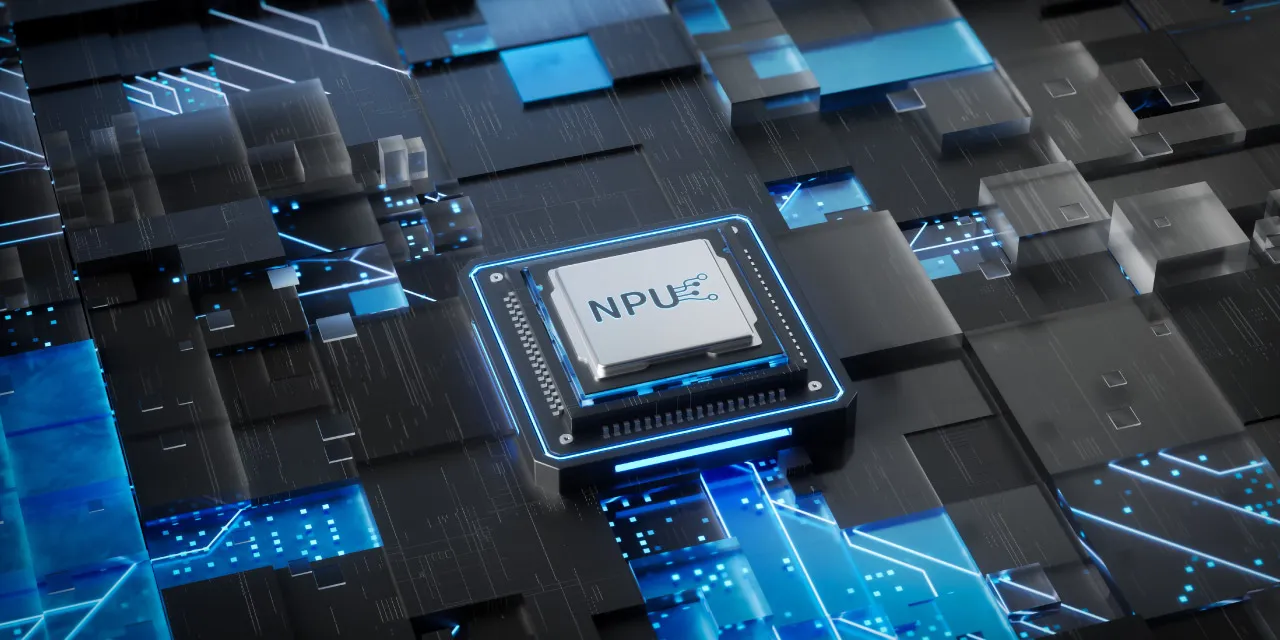
This makes NPUs suitable for tasks such as:
- Object and scene recognition
- Natural language processing
- Speech enhancement
- Image generation and editing
- Background noise removal
- Facial feature analysis
- Recommendation systems
- Predictive analytics
The presence of an NPU does not automatically determine how intelligent a device will be. Software optimization, model architecture, memory bandwidth, and developer support are equally important. An efficient AI chip needs an ecosystem capable of taking advantage of its specialized capabilities.
As AI features become standard across consumer electronics, dedicated acceleration is likely to become less of a premium feature and more of a foundational component of device design.
Applications Across Everyday Technology
On-device AI is already relevant to a wide range of products. Smartphones use local machine learning for photography enhancement, voice features, security functions, and personalization. Laptops can use AI accelerators for video effects, transcription, creative applications, and productivity tools.
Smart home devices can also benefit from local processing. A camera could distinguish between ordinary movement and a potentially important event without uploading every frame. A smart speaker could perform portions of voice recognition locally, reducing dependence on external processing.
In transportation, edge AI can analyze information from cameras, radar, lidar, and other sensors. Industrial systems can monitor machinery and identify unusual patterns before a mechanical failure occurs.
The diversity of these applications demonstrates why specialized hardware matters. AI workloads differ considerably, and each environment has different requirements for speed, power, memory, security, and reliability.
Challenges Facing On-Device AI Chips
Despite their advantages, local AI systems face important limitations. Hardware inside a compact device has less processing power and memory than a large cloud data center. Developers therefore need to optimize models carefully.
Thermal management is another concern. Continuous AI workloads can generate heat, especially in smartphones, laptops, vehicles, and compact industrial devices. Chip designers must balance performance with temperature and battery constraints.
Model updates also create challenges. AI systems evolve rapidly, and manufacturers need practical ways to deploy improved models without creating excessive storage requirements or disrupting device operation.
Security deserves equal attention. Local AI creates new opportunities for protecting data, but the hardware itself can become a target. Secure boot processes, encrypted storage, model protection, access controls, and trustworthy software updates can all contribute to a stronger edge architecture.
How AI Hardware Is Becoming More Specialized
The next generation of edge devices is likely to use increasingly heterogeneous computing architectures. Instead of relying on one processor for everything, systems can distribute workloads across CPUs, GPUs, NPUs, digital signal processors, and other accelerators.
This specialization can improve efficiency because each component handles the type of calculation it is designed to perform. A camera system might use one accelerator for image processing and another for neural inference, while the CPU coordinates the broader application.
revolvertech points toward this specialization as a key part of smarter edge computing. The goal is not simply to make chips faster. It is to make them more efficient at specific AI workloads while fitting within the physical and energy limitations of real-world devices.
The Importance of AI Model Optimization
Powerful hardware alone cannot solve every edge computing challenge. AI models must be designed or adapted for local execution. Techniques such as quantization, pruning, knowledge distillation, and model compression can reduce computational requirements while maintaining useful performance.
Smaller models can operate more efficiently on devices with limited memory and battery capacity. Developers may also divide a complex AI workflow into local and cloud components.
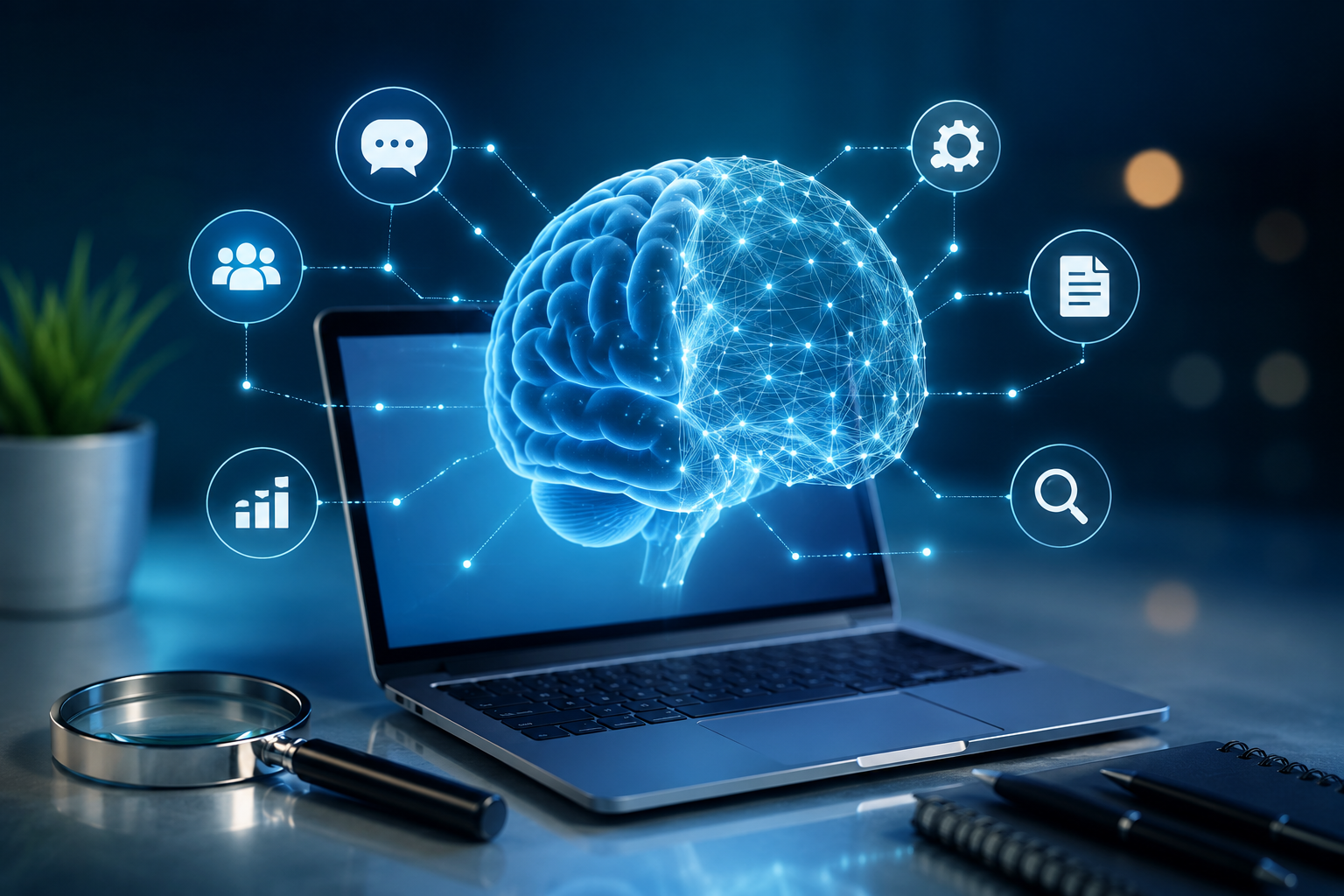
For example, a device could perform initial image classification locally and send only selected information to a remote system for deeper analysis. This reduces network traffic while preserving access to more powerful computing resources when necessary.
This kind of optimization is likely to become an essential development skill as AI moves deeper into everyday hardware.
What Businesses Should Consider
Organizations adopting edge AI should evaluate more than raw chip performance. The right solution depends on the complete system architecture.
Important considerations include:
- AI workload and model size
- Required response time
- Battery or energy limitations
- Data privacy requirements
- Network availability
- Hardware upgrade cycles
- Software and development support
- Security requirements
- Long-term maintenance costs
Businesses should also consider whether AI processing needs to happen continuously or only during specific events. Event-driven inference can significantly reduce power consumption in some applications.
A carefully designed edge strategy can help organizations improve responsiveness while controlling infrastructure and connectivity requirements.
The Future of Smarter Edge Computing
The relationship between AI and edge computing is likely to become increasingly interconnected. As processors become more capable and AI models become more efficient, devices will be able to perform sophisticated tasks that previously required substantial cloud infrastructure.
Future systems may interpret multiple types of information simultaneously, combining audio, video, sensor readings, text, and contextual information. This could enable more natural interactions with machines and more autonomous decision-making across homes, factories, vehicles, and workplaces.
Another important trend will be distributed intelligence. Instead of one central system controlling every operation, groups of connected devices could perform portions of an AI workload independently while communicating only when necessary.
This model could make networks more responsive and reduce unnecessary data movement. It also creates new opportunities for resilient systems that continue operating when centralized services become unavailable.
Why On-Device Intelligence Matters
The shift toward local AI represents more than a hardware upgrade. It reflects a broader change in computing architecture. Intelligence is gradually moving from centralized servers toward the devices and environments where information is generated.
For consumers, this can mean faster features, greater offline capability, and potentially stronger privacy. For businesses, it can enable real-time automation, lower network dependency, and more responsive operations. For developers, it creates new opportunities to design applications around specialized AI hardware.
At the same time, responsible implementation remains essential. Performance must be balanced with security, privacy, energy consumption, cost, and maintainability. The strongest solutions will combine local intelligence with cloud resources rather than treating either approach as universally superior.
Conclusion
On-device AI chips are becoming a critical foundation for the next phase of edge computing. By bringing machine learning capabilities closer to users, sensors, machines, and vehicles, they can reduce latency, limit unnecessary data movement, improve offline functionality, and support more efficient AI experiences. The technology still faces challenges involving model size, thermal constraints, security, hardware limitations, and software optimization. However, continued advances in specialized processors and efficient AI models are steadily expanding what edge devices can accomplish.