


Technology is steadily moving beyond flat screens, keyboards, and traditional interfaces. Spatial computing represents a major step in that evolution by allowing digital information to interact with the physical environment around us. Instead of treating virtual content as something confined to a display, spatial computing places digital objects within three-dimensional spaces where people can see, manipulate, and interact with them. This approach combines technologies such as augmented reality, virtual reality, mixed reality, computer vision, sensors, artificial intelligence, and advanced graphics to create more immersive experiences. revolvertech examines how this emerging computing model could change the way people work, learn, design, communicate, and experience entertainment. The technology is not simply about wearing a headset or viewing hologram-like objects. Its broader purpose is to make computing more natural by understanding physical surroundings and responding to human actions within those surroundings.
Understanding How Spatial Computing Works
Spatial computing depends on a combination of hardware and software that enables devices to understand physical environments. Cameras and sensors can identify surfaces, movement, depth, objects, and the position of users. Processing systems then interpret this information and determine where digital content should appear. Artificial intelligence can further improve environmental understanding by recognizing objects and predicting interactions.
For example, a person designing a new room could use spatial computing to place a virtual sofa, table, or lighting fixture into the actual space before purchasing anything. The digital objects would appear at realistic proportions and could potentially be moved around using gestures or other intuitive controls. This creates an interactive relationship between digital information and physical surroundings. Rather than switching between an application and the real world, users can access information directly within their environment.
Key Technologies Behind Spatial Experiences
Several technologies contribute to the development of effective spatial computing systems. Each solves a different part of the challenge of making digital content behave naturally in physical spaces.
- Computer vision: Helps devices recognize objects, surfaces, and surroundings.
- Depth sensing: Measures distances between users, objects, and environmental features.
- Artificial intelligence: Interprets spatial information and supports intelligent interactions.
- Motion tracking: Follows head, hand, body, and device movements.
- 3D graphics: Creates realistic digital objects and environments.
- Voice recognition: Enables hands-free commands and navigation.
- Spatial audio: Makes digital sounds appear to originate from specific locations.
- Cloud and edge computing: Supports complex processing and data management.
When these technologies operate together, they create a computing environment that responds to location, movement, and context.
How Digital and Physical Worlds Come Together
One of the most important characteristics of spatial computing is its ability to connect digital information with physical surroundings. Traditional applications usually present information inside windows, menus, or screens. Spatial applications can instead associate information with places and objects.
Imagine entering a manufacturing facility and seeing digital instructions positioned beside a machine. A technician could receive step-by-step guidance without constantly looking down at a manual. In another example, an architect could examine a building model at full scale and walk around its virtual structure while standing in an actual design studio.
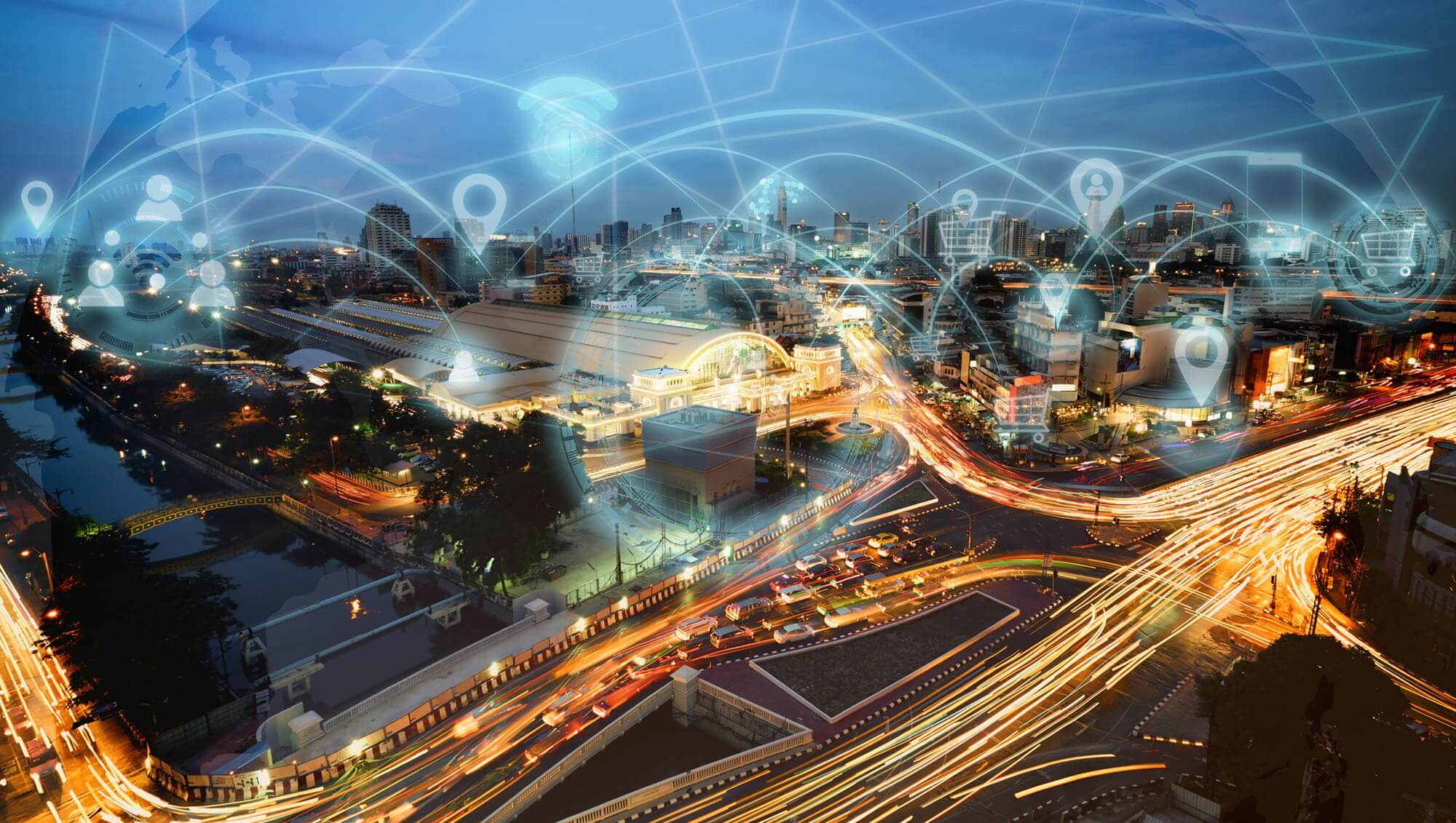
revolvertech highlights this shift because it changes computing from a screen-centered experience into an environment-centered one. The physical world becomes part of the interface. Walls, desks, equipment, vehicles, and even human gestures can become meaningful elements within digital experiences.
Spatial Computing in Education
Education is another area where spatial technology could provide significant benefits. Many subjects are difficult to understand through conventional textbooks because they involve structures, movement, scale, or complex relationships. Spatial computing can make these concepts easier to visualize.
Students studying biology could examine a three-dimensional representation of an organ and explore its internal structure. History learners might walk through a reconstructed ancient environment. Engineering students could inspect virtual machines from different angles without requiring access to expensive physical equipment.
Teachers could also use spatial simulations to create interactive learning activities. Instead of simply explaining how a mechanical system works, they could allow students to observe individual components and understand how they interact.
The value is not only visual immersion. Spatial experiences can encourage active learning because students interact with information rather than passively reading it.
Transforming Healthcare and Medical Training
Healthcare professionals require extensive training, accurate information, and practical experience. Spatial computing can support these needs through visualization and simulation. Medical students could study detailed three-dimensional anatomical models, while healthcare professionals could use interactive simulations for training procedures.
Surgeons and specialists may also benefit from digital overlays that provide relevant information while working with physical environments. When designed carefully, such systems could help professionals understand complex structures and make information easier to access.
Potential applications include:
- Anatomical visualization
- Medical education
- Surgical simulation
- Rehabilitation exercises
- Remote collaboration
- Patient education
- Medical equipment training
These applications demonstrate how spatial technology can connect digital information with real-world activities rather than replacing physical environments altogether.
New Possibilities for Design and Engineering
Design professionals traditionally depend on sketches, computer-aided design software, prototypes, and physical models. Spatial computing can add another layer by allowing designers to examine digital creations inside real environments.
An automotive designer, for instance, could inspect a virtual vehicle model at realistic scale and evaluate its proportions without building a physical prototype. Interior designers could experiment with furniture arrangements, materials, and lighting before making physical changes.
Engineers could similarly inspect complex equipment by viewing digital models over physical components. This could help teams identify potential problems earlier in the development process.
revolvertech explores this development as part of a wider movement toward more intuitive design workflows. When designers can physically move around a digital model, scale it, examine components, and collaborate with others, traditional boundaries between modeling and physical prototyping become less rigid.
Impact on Business and Workplace Collaboration
The modern workplace increasingly involves distributed teams, digital documents, and remote collaboration. Spatial computing could introduce new ways for employees to interact with shared information.
A virtual meeting room could allow participants to examine the same three-dimensional object even when they are located in different cities. Product teams could review digital prototypes together, while architects could discuss building designs using shared spatial models.
Businesses may also use spatial systems for employee training. New workers could practice operating equipment or completing procedures in simulated environments before working with real machinery.
The strongest workplace applications are likely to be those where spatial interaction provides a clear advantage over conventional video calls, documents, or desktop applications. Simply making an existing task immersive does not automatically make it better.
The Role of Artificial Intelligence
Artificial intelligence is becoming increasingly important to spatial computing because environments are complicated. A spatial device must understand what it sees, recognize relevant objects, interpret commands, and respond appropriately.
AI can help systems distinguish between a table, chair, wall, person, or piece of equipment. It can also interpret natural language commands such as asking for information about a particular object in the user’s surroundings.
AI-driven systems may eventually become more context-aware. Instead of requiring users to manually select every digital element, the system could understand the user’s activity and provide relevant information at the right moment.
This combination of spatial awareness and AI could make computing significantly more personalized. However, accurate environmental understanding remains essential because incorrect recognition could lead to confusing or potentially unsafe interactions.
Spatial Computing in Entertainment and Gaming
Entertainment has long been one of the strongest drivers of immersive technology. Spatial computing expands the possibilities by allowing digital experiences to respond to physical movement and surroundings.
Games can transform rooms into interactive environments, while entertainment applications can create virtual objects that appear integrated with real spaces. Museums, theme parks, sports venues, and cultural institutions could also use spatial experiences to provide additional layers of information.
For example, visitors at an exhibition could point toward an artifact and see a three-dimensional reconstruction or historical explanation. A sports fan could potentially access player statistics or visual information positioned within the viewing environment.
These experiences can make entertainment more interactive, but successful adoption will depend on comfort, accessibility, affordability, and genuinely useful content.
Comparing Major Spatial Computing Applications
| Sector | Potential Application | Main Benefit |
|---|---|---|
| Education | 3D learning environments | Better visualization |
| Healthcare | Medical simulations | Safer training |
| Engineering | Virtual prototypes | Faster design testing |
| Manufacturing | Digital instructions | Improved workflow support |
| Retail | Virtual product placement | Better purchase decisions |
| Architecture | Full-scale digital models | More effective design review |
| Gaming | Interactive environments | Greater immersion |
| Business | Shared 3D collaboration | Enhanced teamwork |
The table illustrates that spatial computing is not limited to entertainment. Its broader value comes from placing useful information directly into contexts where people already perform tasks.
Challenges That Could Slow Adoption
Despite its potential, spatial computing faces several challenges. Hardware remains an important factor because headsets and spatial devices must balance processing power, battery life, comfort, and portability.
Cost can also limit adoption. Businesses may be willing to invest in specialized systems where they can demonstrate clear productivity benefits, but consumers may be more cautious if applications do not provide everyday value.
Privacy presents another major concern. Spatial devices may collect information about rooms, objects, movements, voices, and interactions. Protecting this data will be essential for building user trust.
Other challenges include:
- Limited battery capacity
- Device weight and comfort
- Privacy and security risks
- High development costs
- Inconsistent software ecosystems
- Motion discomfort in some experiences
- Lack of widely adopted standards
Overcoming these barriers will require improvements across hardware, software, regulation, and user experience.
Why Spatial Interfaces Could Become More Natural
People naturally understand physical spaces. We know where objects are located, how far away they are, and how to interact with them without thinking about menus or buttons. Spatial computing attempts to use these existing human abilities as part of the computing experience.
Gestures, voice commands, eye movement, and physical positioning can make interactions feel more direct. Instead of searching through several menus to locate a digital object, users may simply look at it or point toward it.
This does not mean traditional interfaces will disappear. Screens remain practical for many tasks, especially when users need to process large amounts of text or work quickly. Spatial interfaces are more likely to complement existing technologies and become especially valuable for tasks involving visualization, collaboration, training, and physical environments.
What the Future May Look Like
The future of spatial computing will likely involve smaller devices, better sensors, stronger AI, improved graphics, and more efficient processing. As technology matures, spatial experiences may become less noticeable and more integrated into everyday activities.
Instead of thinking about putting on a special device to enter an immersive environment, people may eventually use lightweight systems that quietly enhance their surroundings. Digital information could appear when needed and disappear when it is no longer relevant.
revolvertech views this evolution as an important change in the relationship between people and technology. The most successful spatial systems will not necessarily be the ones with the most impressive visual effects. They will be the ones that solve practical problems while remaining comfortable, understandable, private, and easy to use.
Building a More Connected Computing Environment
Spatial computing represents a broader shift in how digital information can exist around us. By combining physical surroundings with virtual content, it creates opportunities that conventional screens cannot always provide. From education and healthcare to engineering, entertainment, retail, and workplace collaboration, its potential applications continue to expand. The technology still has significant challenges, particularly around hardware costs, privacy, comfort, software standards, and practical usefulness. Yet continued improvements in artificial intelligence, sensors, 3D graphics, and processing power could make spatial experiences increasingly capable.