


Automation is entering a new phase where robots are no longer limited to performing the same programmed movement repeatedly. Artificial intelligence is giving machines the ability to interpret information, recognize objects, adjust their actions, and respond to changing environments. This transformation is creating a new generation of intelligent automation designed to work in settings that were previously difficult to automate. From manufacturing floors and warehouses to healthcare facilities, agriculture, construction, and infrastructure maintenance, AI-powered machines are becoming increasingly adaptable.
revolvertech highlights this evolution as part of a broader movement toward smarter, more responsive technology. Traditional robots generally depended on carefully structured environments and predetermined instructions. Modern systems can combine cameras, sensors, machine learning, navigation technologies, and decision-making software to handle greater levels of uncertainty. Instead of simply following a fixed sequence, an intelligent robot can evaluate conditions and select an appropriate action. This shift is important because real-world workplaces are rarely perfectly predictable. Products vary, objects move, obstacles appear, and operational priorities change throughout the day.
How Artificial Intelligence Is Changing Robotic Systems
The most important difference between conventional robotics and AI-powered robotics is the ability to interpret information before taking action. A traditional robotic arm may repeat an assembly movement thousands of times with impressive accuracy, but it usually requires a carefully defined process. An AI-enhanced robot can use visual information, historical data, and sensor feedback to recognize variations and modify its behavior.
Machine learning allows robotic systems to improve performance by analyzing patterns. Computer vision helps machines identify objects, surfaces, people, tools, and potential hazards. Sensor fusion combines information from cameras, lidar, force sensors, proximity detectors, and other technologies. Together, these capabilities allow robots to create a more detailed understanding of their surroundings.
This intelligence can also reduce the amount of manual programming required. Instead of changing every instruction whenever a production process is modified, operators may increasingly provide higher-level objectives. The robot’s software can then determine how to achieve those objectives within predefined safety and operational boundaries.
From Fixed Instructions to Adaptive Behavior
Adaptive behavior is particularly valuable in environments where products or conditions change frequently. Consider a warehouse handling thousands of different packages. A conventional automated system may struggle when package sizes, locations, or routes change. An AI-powered mobile robot, however, can use perception and navigation systems to identify available pathways and adjust its route.
Similarly, a manufacturing robot may need to work with components that differ slightly in shape or position. AI-based vision can help locate each component before the robot attempts to manipulate it. This flexibility makes automation more practical for businesses that cannot justify highly specialized machinery for every individual task.
revolvertech points toward a future in which robots become more software-defined. Hardware remains essential, but software increasingly determines how effectively that hardware can respond to new situations. This makes upgrades, optimization, and task expansion important parts of the robotics lifecycle.
Key AI-Powered Robotics Developments Driving Automation
Several technological developments are contributing to the rapid evolution of intelligent robotics. They are not isolated innovations; instead, they increasingly work together as interconnected parts of an automation ecosystem.
1. Advanced Computer Vision
Computer vision gives robots the ability to interpret visual information. Modern systems can detect objects, classify components, identify defects, estimate distances, and monitor movement.
In manufacturing, vision-enabled robots can inspect products for inconsistencies. In warehouses, cameras can help machines locate packages and recognize storage spaces. In agriculture, computer vision can distinguish crops from weeds or identify plants requiring attention.
The value of computer vision extends beyond identification. When combined with machine learning, robots can interpret situations and make decisions based on what they observe.
2. Intelligent Mobile Robots
Autonomous mobile robots are becoming increasingly useful in warehouses, factories, hospitals, campuses, and other large environments. Rather than moving along fixed tracks, these machines can navigate spaces using maps, sensors, cameras, and software.
Their applications include:
- Moving materials between production areas
- Transporting inventory across warehouses
- Delivering supplies within healthcare facilities
- Carrying tools and equipment
- Supporting inspection and maintenance
- Navigating around workers and temporary obstacles
The combination of mobility and AI enables these robots to operate in environments that change throughout the day.
3. Generative and Agentic AI for Robotics
Generative AI is beginning to influence robotics by helping systems understand more complex instructions and produce useful plans. Instead of requiring operators to communicate exclusively through specialized programming interfaces, future robots may increasingly understand natural-language commands.
Agentic AI takes this concept further by allowing systems to break broader objectives into multiple actions. For example, instead of being instructed to perform five separate movements, a robot could receive a goal such as preparing a workstation and then determine the necessary sequence within its operational limits.
These developments could make robotics easier to deploy, particularly for organizations without large teams of specialized robotic programmers.
AI Robotics Across Different Industries
The impact of intelligent robotics is not limited to factories. As sensing, computing, connectivity, and machine learning improve, robots can support an expanding range of industries.
| Industry | AI Robotics Application | Main Advantage |
|---|---|---|
| Manufacturing | Assembly, inspection, material handling | Higher consistency |
| Warehousing | Picking, sorting, transportation | Faster fulfillment |
| Healthcare | Delivery, assistance, monitoring | Reduced repetitive workload |
| Agriculture | Crop monitoring and harvesting | Greater precision |
| Construction | Inspection and material movement | Improved productivity |
| Retail | Inventory and shelf monitoring | Better stock visibility |
| Energy | Infrastructure inspection | Safer maintenance |
| Hospitality | Delivery and service assistance | Operational efficiency |
Manufacturing remains one of the strongest areas for robotics because production environments often contain repetitive tasks that can be precisely measured. However, flexible AI systems are gradually expanding automation into less structured environments.
In logistics, for example, robots can support increasingly complicated material flows. They can transport items, coordinate with other machines, and adjust routes according to operational requirements. In agriculture, intelligent machines can address labor-intensive activities while using data to make decisions about individual plants or sections of farmland.
Healthcare is another promising area. Robots can transport medicines, supplies, meals, and equipment, allowing healthcare professionals to spend more time on tasks requiring direct human interaction.
The Growing Importance of Human-Robot Collaboration
The future of automation does not necessarily mean removing people from every automated environment. In many cases, the more practical model involves humans and robots working together.
Collaborative robots, often called cobots, are designed to operate closer to human workers than traditional industrial robots. AI can make these systems more responsive by helping them interpret human movement, recognize objects, and adjust their behavior.
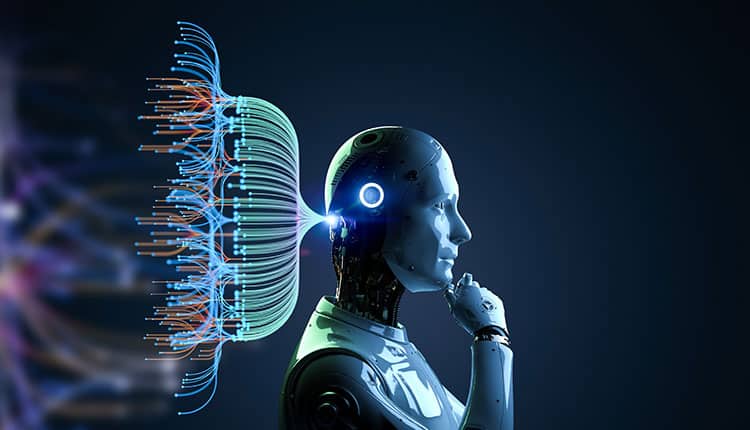
A human worker may handle a complicated decision while the robot performs a physically repetitive task. For example, a worker could inspect an unusual component while a robotic assistant handles standard parts. This arrangement allows organizations to combine human judgment with robotic consistency.
revolvertech emphasizes the broader significance of this model: next-generation automation is increasingly about cooperation rather than simple replacement. Businesses can use robots for repetitive, dangerous, physically demanding, or highly consistent activities while allowing employees to focus on supervision, problem-solving, quality control, creativity, and specialized expertise.
Smarter Robotics Through Real-Time Data
Data is becoming one of the most valuable resources in modern robotics. Every movement, sensor reading, detected object, maintenance event, and operational error can potentially provide information for improving future performance.
When robotic systems are connected to broader industrial platforms, managers can gain a more complete view of automated operations. Data can reveal bottlenecks, identify unusual behavior, predict maintenance requirements, and help optimize production schedules.
Predictive maintenance is especially important. Instead of waiting for a robotic component to fail, AI can analyze vibration, temperature, motor behavior, or other signals to identify potential problems. Maintenance teams can then investigate issues before they cause major downtime.
This approach changes the role of robotics from isolated machinery into an intelligent operational system. The robot does not simply perform work; it also generates information that can help organizations understand and improve that work.
Digital Twins and Simulation-Based Robotics
Testing robots directly in a physical environment can be expensive and time-consuming. Digital twins offer an alternative by creating virtual representations of machines, facilities, workflows, or production environments.
Organizations can use simulations to test robotic movements, identify collisions, optimize routes, and evaluate changes before implementing them physically. AI can further improve these simulations by generating different scenarios and helping determine efficient strategies.
For example, a warehouse operator could simulate changes to storage layouts before moving physical inventory. A manufacturer could test a new robotic workflow virtually before installing equipment on the production floor.
This combination of simulation and AI can reduce implementation risks while accelerating experimentation.
Why AI-Powered Robotics Can Improve Business Efficiency
Businesses are adopting intelligent automation for more than speed. Modern robotics can address several operational challenges simultaneously.
Major potential advantages include:
- Greater consistency: Robots can perform repetitive tasks with stable precision.
- Improved workplace safety: Machines can handle dangerous or physically demanding activities.
- Flexible production: AI can help robots adapt to variations in products and processes.
- Reduced downtime: Predictive systems can identify possible equipment problems earlier.
- Faster operations: Autonomous systems can perform certain activities continuously.
- Better resource utilization: Data-driven automation can improve the use of equipment and materials.
- Scalable workflows: Software updates can expand capabilities without completely replacing hardware.
However, automation should not be viewed as an instant solution to every operational challenge. Organizations must consider integration costs, employee training, cybersecurity, maintenance, data quality, and safety requirements.
Challenges Holding Back Next-Generation Robotics
Despite impressive progress, AI-powered robotics still faces significant obstacles. Physical environments are far more complicated than digital environments. A robot that performs perfectly in a controlled demonstration may encounter unexpected conditions in a busy factory or warehouse.
Dexterity remains another challenge. Picking up a standardized object is relatively straightforward, but handling soft, irregular, fragile, or unpredictable objects requires sophisticated sensing and control.
Safety is equally important. Robots working near humans must respond reliably to unexpected movements and changing circumstances. Organizations also need clear procedures for monitoring, maintenance, emergency intervention, and software updates.
Another concern is cybersecurity. Connected robots can become part of an organization’s digital infrastructure, meaning security weaknesses could affect both data and physical operations. Protecting communication systems, software, access controls, and operational networks is therefore essential.
Workforce preparation is also critical. Employees may need training in robotics supervision, maintenance, data analysis, safety management, and AI-enabled workflows. Successful automation depends not only on machines but also on people who understand how to manage them.
What Businesses Should Consider Before Adopting AI Robotics
Companies interested in intelligent automation should avoid adopting technology simply because it is new. A clear business problem should come first.
Before investing, organizations can evaluate:
- Which repetitive or hazardous tasks consume the most resources?
- How frequently do operating conditions change?
- What data is already available?
- Can existing infrastructure support robotic systems?
- How will employees interact with the technology?
- What safety procedures are required?
- How easily can the system scale?
- What maintenance and training will be necessary?
Starting with a focused use case can be more effective than attempting to automate an entire operation immediately. A successful pilot can provide measurable evidence about productivity, reliability, operating costs, and employee acceptance.
revolvertech reflects this practical approach to automation: the strongest deployments are likely to be those where AI and robotics solve clearly defined problems rather than being introduced purely for technological prestige.
The Future of Intelligent Automation
The next generation of robotics is likely to become more capable, connected, and adaptable. Robots may increasingly understand spoken instructions, recognize unfamiliar objects, learn from demonstrations, coordinate with other machines, and respond to changing priorities.
Humanoid robots may receive considerable attention because their physical form allows them to operate in environments designed for people. However, specialized robots will remain extremely important. A machine designed for one highly specific industrial task can often outperform a general-purpose robot in speed, reliability, and cost.
The future may therefore contain many different categories of intelligent machines: mobile robots moving materials, robotic arms performing precision work, inspection robots monitoring infrastructure, agricultural machines managing crops, and general-purpose systems handling a broader range of tasks.
Connectivity will also become increasingly important. Robots will not necessarily operate independently. They may share information with factory software, warehouse management systems, digital twins, sensors, and other machines. This could create coordinated automation networks capable of responding to operational changes in real time.
Conclusion
AI-powered robotics is transforming the meaning of automation. The objective is no longer simply to make machines repeat predefined actions faster. The emerging goal is to create systems capable of sensing environments, interpreting information, adapting to variations, and collaborating with people. The combination of artificial intelligence, computer vision, advanced sensors, autonomous navigation, simulation, connectivity, and intelligent decision-making is creating opportunities across manufacturing, logistics, healthcare, agriculture, construction, energy, and many other industries. At the same time, successful adoption will require careful attention to safety, cybersecurity, workforce development, data quality, and economic practicality. revolvertech highlights a future where robotics becomes a flexible layer of intelligent infrastructure rather than a collection of isolated machines. Businesses that approach this transition strategically can use automation to improve efficiency while creating new opportunities for employees to focus on higher-value responsibilities.

.jpg&description=Explore AI-powered robotics developments transforming automation through smarter machines, adaptive systems, vision, and human-robot collaboration.)